Fast response cutter USCGC Glen Harris (WPC 1144) sails near a U.S sail drone explorer in the Gulf of Aqaba, during the International Maritime Exercise/Cutlass Express. Sgt. Deandre Dawkins/U.S. Naval Forces Central Command)
(WASHINGTON) -- U.S. military officials said Tuesday that an unmanned drone boat rescued two crew members aboard a U.S. Army Apache attack helicopter that crashed in the waters nears the Strait of Hormuz, which President Donald Trump said Iranians shot down.
U.S. officials are describing the rescue as the first time that an unmanned surface drone has been used to successfully rescue crew members at sea.
The AH-64 helicopter crashed at 7:33 p.m. EDT on Monday, leaving the pilots in the waters off Oman, according to U.S. Central Command.
"The Soldiers were safely rescued within approximately two hours and are in stable condition," according to a CENTCOM statement.
The Navy surface drone -- described by a U.S. official as looking like a speedboat -- located the two Apache crew members, who were then able to board the vessel, which transported them to another location on that water where they were then hoisted up to a helicopter for further transport, according to a U.S. official.
"The surface drone that assisted in last night's rescue of the Apache crew off the coast of Oman was a U.S. Navy Corsair unmanned surface vessel operated by U.S. 5th Fleet’s Task Force 59. The task force began fielding these drones in theater in late March," said Capt. Tim Hawkins, the spokesman for U.S. Central Command.
Trump said Tuesday afternoon that the military informed him Iran was to blame for the helicopter crash, vowing that the U.S. must "respond to this attack."
ABC News has reached out to the White House on whether the weekslong shaky ceasefire with Iran is now over.
What is Task Force 59?
Task Force 59 operates a variety of autonomous surface drones in the waters of the Middle East, as well as aerial drones. The task force, established in 2021, uses its unmanned drones to provide quick reconnaissance capabilities and integrate artificial intelligence to share with crewed warships operating in the region, according to the Navy.
With not enough manned vessels to maintain a constant awareness of what is going on in the Middle East's waters, the drones enhance the 5th Fleet's capabilities to detect smuggling and Iranian malign activity, Navy officials said.
"For pennies on the dollar we can put unmanned platforms out there, we can couple it with artificial intelligence … and then, I think critically important, we can use our manned ships much more efficiently, much more effectively,” then-5th Fleet Commander Vice Adm. Brad Cooper told reporters in October 2022 following a regional exercise to highlight the task force's capabilities. Cooper is now serving as the commander of U.S. Central Command.
The cost for the boat drone used to rescue the Apache crew is estimateed to be about $1.2 million per drone, according to a report from Sacra, a market research firm. That cost is extraordinarily cheap relative to traditional, manned military vessels.
Artificial intelligence is used to analyze patterns of behavior detected by the sensors aboard the drones, which is then shared with commanders and ships operating in the region.
In addition to the Corsair used in the operation, Task Force 59 uses other notable unmanned surface drones including the T-38 Devil Ray and the Sail Drone.
The Devil Ray is a high-speed autonomously operated unmanned surface vessel that is mainly used to gather intelligence, surveillance and reconnaissance, according to its manufacturer.
In one exercise in 2024, it successfully fired live munitions at a training target.
The Sail Drone looks just like its name implies, it is an autonomous water platform topped by a sail that provides power through wind and solar energy, according to its manufacturer.
A network of Sail Drones can provide a clearer at-sea situational awareness in hostile environments, according to its manufacturer.
An Arabian Fox MAST-13 unmanned surface vessel, attached to U.S. Naval Forces Central Command's Task Force 59, conducts surveillance in the Arabian Gulf, Nov. 21. (Pfc. Tyrin Saunders/U.S. Naval Forces Central Command)
(WASHINGTON) -- U.S. military officials said Tuesday that an unmanned drone boat rescued two crew members aboard a U.S. Army Apache attack helicopter that crashed in the waters nears the Strait of Hormuz, which President Donald Trump said Iranians shot down.
U.S. officials are describing the rescue as the first time that an unmanned surface drone has been used to successfully rescue crew members at sea.
The AH-64 helicopter crashed at 7:33 p.m. EDT on Monday, leaving the pilots in the waters off Oman, according to U.S. Central Command.
"The Soldiers were safely rescued within approximately two hours and are in stable condition," according to a CENTCOM statement.
The Navy surface drone -- described by a U.S. official as looking like a speedboat -- located the two Apache crew members, who were then able to board the vessel, which transported them to another location on that water where they were then hoisted up to a helicopter for further transport, according to a U.S. official.
"The surface drone that assisted in last night's rescue of the Apache crew off the coast of Oman was a U.S. Navy Corsair unmanned surface vessel operated by U.S. 5th Fleet’s Task Force 59. The task force began fielding these drones in theater in late March," said Capt. Tim Hawkins, the spokesman for U.S. Central Command.
Trump said Tuesday afternoon that the military informed him Iran was to blame for the helicopter crash, vowing that the U.S. must "respond to this attack."
ABC News has reached out to the White House on whether the weekslong shaky ceasefire with Iran is now over.
What is Task Force 59?
Task Force 59 operates a variety of autonomous surface drones in the waters of the Middle East, as well as aerial drones. The task force, established in 2021, uses its unmanned drones to provide quick reconnaissance capabilities and integrate artificial intelligence to share with crewed warships operating in the region, according to the Navy.
With not enough manned vessels to maintain a constant awareness of what is going on in the Middle East's waters, the drones enhance the 5th Fleet's capabilities to detect smuggling and Iranian malign activity, Navy officials said.
"For pennies on the dollar we can put unmanned platforms out there, we can couple it with artificial intelligence … and then, I think critically important, we can use our manned ships much more efficiently, much more effectively,” then-5th Fleet Commander Vice Adm. Brad Cooper told reporters in October 2022 following a regional exercise to highlight the task force's capabilities. Cooper is now serving as the commander of U.S. Central Command.
The cost for the boat drone used to rescue the Apache crew is estimateed to be about $1.2 million per drone, according to a report from Sacra, a market research firm. That cost is extraordinarily cheap relative to traditional, manned military vessels.
Artificial intelligence is used to analyze patterns of behavior detected by the sensors aboard the drones, which is then shared with commanders and ships operating in the region.
In addition to the Corsair used in the operation, Task Force 59 uses other notable unmanned surface drones including the T-38 Devil Ray and the Sail Drone.
The Devil Ray is a high-speed autonomously operated unmanned surface vessel that is mainly used to gather intelligence, surveillance and reconnaissance, according to its manufacturer.
In one exercise in 2024, it successfully fired live munitions at a training target.
The Sail Drone looks just like its name implies, it is an autonomous water platform topped by a sail that provides power through wind and solar energy, according to its manufacturer.
A network of Sail Drones can provide a clearer at-sea situational awareness in hostile environments, according to its manufacturer.
U.S. Speaker of the House Mike Johnson (R-LA) attends a press conference at the U.S. Capitol on May 20, 2026 in Washington, DC. (Kevin Dietsch/Getty Images)
(WASHINGTON) -- President Donald Trump and House Speaker Mike Johnson are meeting at the White House on Tuesday as the deadline nears for Congress to reauthorize Section 702 of the Foreign Intelligence Surveillance Act.
Their huddle comes as Trump's choice of Bill Pulte to be acting director of national intelligence slows efforts on Capitol Hill to renew the controversial spy program by end of day Friday, or face the first-ever lapse in the program's legal authorization.
Democrats in both chambers have signaled objections to Pulte, contending the director of the U.S. Federal Housing Finance Agency does not have any national intelligence experience.
As he left the Capitol on Tuesday, Johnson told ABC News Correspondent Jay O'Brien that it's up to the president to choose whoever he wants to run the Office of the Director of National Intelligence, rebuffing pressure to change course.
"Is it time for the president to change his mind on Bill Pulte as acting DNI?" ABC's O'Brien asked Johnson.
"It's the president's prerogative," Johnson answered. "I'm going over there right now to visit with him and his team about a number of items."
At the top of that list is FISA's Section 702, which allows the federal government to collect communications of foreigners abroad without a warrant, including when those people are communicating with Americans. The program has been fully reauthorized by Congress three times since the intelligence tool was created by law in 2008.
House Majority Leader Steve Scalise told reporters that Trump and Johnson are meeting "to finalize this agreement on FISA."
"FISA has been used time and time again to stop terrorist attacks here on our homeland on American soil to prevent terrorist attacks, and that's a critical, critical tool that we need to renew," Scalise said.
Johnson signaled that the House is waiting for the Senate to act on FISA, a feat that will require the bipartisan support of at least 60 senators.
"We passed FISA reauthorization in the House in April. It's still sitting over in the Senate. They're working on another compromise bill," Johnson told ABC News. "We'll pass what they send."
Senate Majority Leader John Thune told reporters on Tuesday that he believes Trump is "weighing seriously" naming a permanent nominee to serve as director of national intelligence as Pulte's appointment stalls FISA movement on the Senate floor. Pulte can only serve on an acting basis for up to 210 days without Senate confirmation.
Thune said he has not spoken directly to Trump about Pulte but that he's "been in contact with somebody over there that cares a lot about this."
"I don't think [it's] about replacing Pulte," Thune said when asked about what the White House might be considering as a next step. "I think they're weighing seriously making a long-term pick."
Pulte is best known in the Trump administration for launching probes into several of the president's perceived political enemies over allegations of mortgage fraud and possible misuse of authority. Targets of the investigations include Federal Reserve Governor Lisa Cook, New York Attorney General Letitia James, Democratic Sen. Adam Schiff and former Democratic Rep. Eric Swalwell. They've all denied wrongdoing.
Before the president announced he was tapping Pulte to lead ODNI in the wake of Tulsi Gabbard's resignation, a bipartisan group of lawmakers was coalescing toward passage of a three-year FISA reauthorization. But Democrats are now balking at a long-term extension over their objections to Pulte.
"This was a bipartisan, bicameral, four-corners deal that everybody had pretty much signed off on, and the naming of Pulte to that position, although the timing arguably wasn't the best, I still don't think it ought to derail something that's this important," Thune said last Friday.
Democratic U.S. Senate candidate Graham Platner speaks to voters at a town hall at the Elks Lodge 188 on June 7, 2026 in Portland, Maine. (Photo by Laura Brett/Getty Images)
(NEW YORK) -- Maine voters will decide on Tuesday whether oyster farmer Graham Platner will be the Democratic Party's nominee to take on longtime Republican Sen. Susan Collins in November.
Maine Gov. Janet Mills is also on the Democratic Senate primary ballot on Tuesday, as is former Maryland state official David Costello. However, Mills suspended her campaign in late April citing financial resources, and a University of New Hampshire poll published recently found that Costello "is largely unknown."
Platner has been fighting controversies throughout his campaign, ranging from him once getting a tattoo accused of resembling a Nazi symbol to allegations published by The New York Times and The Wall Street Journal claiming he sent sexually explicit texts to women.
And last Thursday, the Times reported that some of the Army veteran's former girlfriends said that his actions could be "intimidating and disturbing."
Platner did not deny the allegations that he sent sexually explicit texts, saying that his wife "went through something hard -- because of me."
In a statement after the Times' story was published last Thursday, Platner said, "Throughout this campaign, I've been open about what was a very dark period of my life where I struggled with undiagnosed PTSD, too often self medicated with alcohol, and was a far from perfect boyfriend," "I take responsibility for all of that, and wish I had been better. Any characterization beyond that is false, and I believe, politically motivated."
Platner previously covered up the controversial tattoo, saying at the time that it came up "because the establishment is trying to throw everything it can at me. It is terrified of what we are trying to build here."
During a rally in Bar Harbor, Maine, on Friday -- one day after the Times' most recent story, Platner said that "every single piece" of his past and journey is being "dug up, litigated and weaponized."
Also after the Times' latest report, Platner told ABC affiliate WMTW that "I'm very happy to talk about incredibly uncomfortable things in my life, but when things come along that are just made up or lies, I'm very much going to push back against those."
Throughout the campaign cycle, polling has found that most likely primary voters view Platner positively. The University of New Hampshire poll, which published shortly before the most recent reports on Platner, found that 76% of likely voters planned on ranking Platner, a progressive who has focused on wealth inequality, first on their ballots, which have ranked choice voting.
Given Maine's system of ranked choice voting and having local municipalities -- not the state government -- be responsible for counting the ballots on election night, it remains unclear how long it will take for each race to be called.
What voters are saying
Portland, Maine, voter Tyler Stoddard told ABC News that he supports Platner, explaining that he feels that people are focusing too much on personal matters.
"I think that he's going to break the Republican majority in the Senate, and I think that will help stop Donald Trump," Stoddard said.
Yarmouth, Maine, resident Janet Marstine told ABC News that she voted early for Mills.
"I don't trust the frontrunner in the Democratic Party. He has too many secrets, and we don't even know the depth of them," Marstine said, adding that Mills "knows Maine more than any other leader, really, in this state."
Affordability in 'Vacationland' top of mind
The Senate race is far from the only one on the largely ranked choice ballot in Maine on Tuesday.
In a state that describes itself as "Vacationland" on its license plates, affordability is top of mind, with many candidates including the issue in their campaign materials.
The gubernatorial primaries along with the Democratic primary in the 2nd Congressional District are expected to be particularly competitive.
Sitting Democratic Rep. Jared Golden is not running for reelection in the geographically sizable 2nd Congressional District.
With control of the House up for grabs this November, Democrats like Joe Baldacci, Matt Dunlap and Jordan Wood want to keep the seat blue while former Republican Gov. Paul LePage is seeking to make it red.
Baldacci has the backing of the Democratic Congressional Campaign Committee, while Dunlap has aligned himself with Platner. Prior to Katie Porter's unsuccessful run for California governor, Wood served as her congressional chief of staff.
In the governor's race, the Democrats running include former Maine Senate President Troy Jackson, former Maine Center for Disease Control and Prevention Director Nirav Shah, Maine Secretary of State Shenna Bellows and former Maine House Speaker Hannah Pingree. Jackson, Bellows and Pingree previously announced they will rank each other on their ballots.
Candidates seeking the Republican nomination include former Naval Intelligence Officer Bobby Charles, businessman Ben Midgley, former Maine Senate Majority Leader Garrett Mason and former Athenahealth CEO Jonathan Bush, who is former President George W. Bush's cousin.
In Maine, voters who do not belong to either major party are allowed to choose to vote in one party's primary when they show up to vote.
Early voting in Maine concluded last Thursday. Voters who did not cast their ballots early have until 8 p.m. to vote on Tuesday.
(WASHINGTON) -- The Senate on Monday formally received President Donald Trump's nomination of Todd Blanche to serve as attorney general, teeing off what could be a potentially contentious confirmation battle.
This is a developing story. Please check back for updates.
Kamala Harris speaks during a fireside chat at MEET Las Vegas on May 07, 2026 in Las Vegas, Nevada. (Ian Maule/Getty Images)
(WASHINGTON) -- Former Vice President Kamala Harris said she's "thinking about" a 2028 presidential bid, but some previous supporters are unenthusiastic -- despite her national name recognition and experience as second in command.
ABC News spoke with more than 15 former donors, fundraisers, campaign aides, Biden White House staffers and current advisers about Harris running again, some of whom asked not to be named to be able to speak freely.
A source familiar with Harris' thinking told ABC News that she's considering all options, but hasn't begun explicitly deliberating on a run with her team.
Kamala Harris vs. Gavin Newsom
Like Harris, California Gov. Gavin Newsom got his start in San Francisco politics. He is also viewed as a top 2028 presidential contender and may gain some of her supporters, though has not formally committed.
Former San Francisco Mayor Willie Brown, one of California's top powerbrokers, told ABC News while it's early to speculate, he believes the most "viable" between his two mentees would be Newsom, "because he would not be the most recent loser."
"When you embrace somebody for the job, you really want to embrace a winner, and Newsom would be what you would have to say at the moment is a winner," Brown said.
Brown said he was "surprised" that Harris decided not to run for California governor in 2026.
"I would have advised her to be elected governor, so that she would be in the same identical position, if not better than for electability nationally than Newsom. .... If she was in the category of being on January 8, 2027, the governor of California, the dialogue would be about her candidacy, not about anybody else's," Brown said.
An influential California donor and early Harris supporter told ABC News, "I have not heard one person suggest it would be good for anything if she ran. ... We are looking for someone who is fresh and not imposed on the voters. We understood we were stuck with the situation last time, but this is not the case going forward."
Asif Mahmood, a bundler who's backed Harris for 15-plus years, said, "If it is Kamala and Newsom, the money will be divided, and I think Newsom might have little edge on that because he's currently governor."
"It is not that I can say with certainty that I will be backing her the way I was backing before, depending on the field," Mahmood added.
A source close to Harris said that if she ran, she'd be aware that donors and operatives may align with other campaigns.
Sour feelings among some donors
Harris' 2024 presidential campaign burned through more than $1 billion in 15 weeks -- which some fundraisers said has discouraged them from giving large sums to campaigns going forward.
"I think the electorate is going to be extremely hungry for a new, fresh, younger voice with a different perspective, and who can effectively articulate an agenda for the future. ... I don't believe that Kamala is the right person for this moment by any stretch of your imagination," said a fundraiser who raised money for Harris' 2024 run.
A longtime Democratic donor who raised money for Harris' 2020 presidential campaign told ABC News, "I really have not heard anybody say that they want her to run. In fact, it's the opposite."
"I really think that anyone who became the nominee after Biden dropped out would have raised a ton of money. ... I don't know a lot of at least big donors who were like, 'I feel really great about putting this money in for her.' It was just, she was the top of the ticket," the donor added.
One Harris 2020 fundraiser who was involved with her 2024 run said, "For somebody who wants to have a future political career, she has done nothing ... to maintain any relationships with anybody that I'm aware of ... that were her big donors. We're now two years into it, and I don't know anybody's even got a thank you note."
But a couple fundraisers ABC News spoke with felt differently.
“The average Democratic voter who gives 10 bucks, 20 bucks, right now likes Kamala Harris, so she'll have an ability to raise a lot of grassroots money, which is the mother of local politics," said Tom Nides, a former Biden administration official who fundraised for Harris in 2024 when she became the nominee. "The big dollar money is becoming less significant, and they will come on board if they think she's gonna win.”
In response to a request for comment regarding the seemingly unenthusiastic sentiment among some donors, a spokesperson for Harris said in a statement, "The Vice President is grateful to the supporters who have stood with her. Right now, as Americans look for leadership in the fight against the rollback of their fundamental rights and freedoms — including the Supreme Court's devastating gutting of the Voting Rights Act — she is focused on electing Democrats up and down the ballot in the midterms and building up state parties for the critical fights ahead."
'Biden fatigue'
For some, Harris' association to former President Joe Biden -- who withdrew from the race only after facing mounting pressure from Democrats -- will be scrutinized.
"There is a kind of Biden fatigue," said a former senior campaign adviser who worked on Harris' 2024 campaign.
"She was obviously his vice president, which is a benefit. ... But also, a detriment in other ways, especially when your boss was not very popular when he left office. ... I think the donors, and just the electorate writ large, they have an appetite for a fighter, but they kind of want some new faces," the former adviser said.
One 2020 Harris fundraiser said her opponents would seize on her not calling on Biden to drop out earlier in a potential 2028 debate.
However, Ashley Etienne, the vice president's former communications director, said Harris distanced herself enough with her book "107 Days," which details her frustrations with Biden.
"I think that in 2028, if things are continuing as they are now, and there's the affordability issue, costs, unemployment, lack of democratic principles, I think that Biden thing is not going to be an issue anymore," said one former senior campaign adviser who remains close to Harris.
Another source close to Harris said enough time would have passed by, and she could address her association with Biden with self-reflection about topics she couldn't address as vice president.
Decision to not run for governor Harris' decision not to run for California governor this year came as a disappointment for some, but was viewed as strategic to others.
"Had Harris entered the race, she would have cleared the field and saved Democrats a lot of pain and uncertainty that developed in this primary," Mahmood said.
Etienne said if she jumped into the gubernatorial race, it would've been a "losing proposition."
"For somebody who wants to be president, somebody who was already vice president, I didn't see that as a really good, sound move. ... I just didn't think she gained anything by doing it," Etienne said.
A longtime supporter of Harris said he was "surprised" by Harris’ decision not to run for governor, because it would’ve been a "significant" role for her, but said at the time she was making the decision, her campaign would have been hit by questions regarding her defense of Biden and why she didn’t press him to drop out sooner.
A former senior campaign adviser who remains close to Harris said there was a sense that Harris had to make a decision on a gubernatorial run too quickly after the presidential campaign.
How Harris may be approaching her 2028 decision A source close to Harris said that if she ran in 2028, she'd have high name recognition, favorability among Democrats, freedom to articulate her vision without restraints of the vice presidency and more time.
The source added that Harris is focused on the midterms -- helping raise money for candidates and state parties -- and vocalizing opposition to Republican-led redistricting efforts in the South.
In August, Harris will be delivering a keynote speech to Louisiana Democrats at the party's annual fundraiser gala, where she will outline what she thinks Democrats must do to counteract the Louisiana vs. Callais decision that gutted Section 2 of the Voting Rights Act. The former vice president has also been placing calls to federal and state lawmakers impacted by the decision, including members of the Congressional Black Caucus. During the spring, she anchored fundraising events for Democratic state parties in North Carolina, South Carolina, Arkansas, Georgia and Nevada.
Her decision could hinge on whether she thinks a presidential campaign or setting up a foundation would be a better vehicle to advance her vision for America, according to the source familiar.
Adrienne Elrod, who served as Harris' senior adviser and spokesperson in 2024, said, "I think anyone who has valuable ideas about how to move our country forward. ... they should run for president, especially if they have broad experience to bring to the table, and she certainly fits that bill."
Etienne said she thinks Harris should run and said she can distinguish herself from the field as she's not currently serving in office for the first time in her political career.
"Folks think she's fantastic, but there was some obvious, baggage that she had, and so how are you in this short period of time addressing that, offloading it, and then coming out with this combination of feeling fresh and new, yet seasoned enough to bring the nation through what Trump is taking us," Etienne said.
"It's really hard to run for president, and I think people who haven't done it underestimate the difficulty and the scrutiny and all the things that come with it at that level, and so in a lot of ways the best way to be prepared to run is to have run already," said a former senior campaign adviser who remains close to Harris.
: Senate Majority Leader John Thune (R-SD) heads for the Senate Chamber in between votes at the U.S. Capitol on June 04, 2026 in Washington, DC. The Senate began a marathon session of amendment votes on the $70 billion immigration enforcement bill. (Chip Somodevilla/Getty Images)
(WASHINGTON) --The Senate voted early Friday morning to approve a $70 billion immigration enforcement package that includes nothing to rein in the administration's so-called "Anti-Weaponization Fund."
The immigration enforcement bill passed by a vote of 52-47.
Sen. Lisa Murkowski was the only Republican to join all Democrats in voting against the bill. All other Senate Republicans voted for it, giving the legislation enough support to be narrowly approved. Republicans applauded as the bill was gaveled down early Friday morning.
The bill now heads to House of Representatives, which is not expected to take it up for consideration until next week.
The Senate sends this bill to the House with no language that would in any way restrict or permanently end the administration's so-called "Anti-Weaponization Fund."
The Department of Justice created the $1.8 billion fund in exchange for President Donald Trump agreeing to drop his $10 billion lawsuit against the Internal Revenue Service. But after backlash, acting Attorney General Todd Blanche said earlier this week the DOJ was scrapping plans for the fund, though Trump has continued to defend it as a "beautiful thing."
Democrats and some Republicans wanted to use the more than 18-hour voting process overnight to amend the bill to include something to rein in fund, but they ultimately failed to get the votes necessary to approve a single amendment related to it.
There were several Republicans who supported amendments to curtail the fund throughout the process, including Sens. Murkowski, Thom Tillis, Bill Cassidy, Jon Husted, Dan Sullivan and Susan Collins.
That support, however, wasn't enough to make any of those amendments stick and, despite previously expressing reservations about supporting this bill if amendments to rein in the fund went unapproved, Tillis and Cassidy both ultimately supported final passage of the immigration enforcement bill.
"After tonight's vote, it's clear to Americans that Republicans refuse to outlaw Donald Trump's $2 billion slush fund," Senate Minority Leader Chuck Schumer, the chamber's top Democrat, said on the Senate floor. "Now the whole country can see the truth: Republicans fought like hell to please Donald Trump and his slush fund but didn't lift a finger to help working Americans lower their costs."
Former National Security Adviser John Bolton speaks to reporters after speaking in a panel hosted by the National Council of Resistance of Iran – U.S. Representative Office at the Willard InterContinental Hotel on Aug. 17, 2022, in Washington, D.C. (Photo by Anna Moneymaker/Getty Images)
(WASHINGTON) -- President Donald Trump's former national security adviser John Bolton is expected to plead guilty over mishandling classified information, sources familiar with the matter told ABC News Thursday.
Bolton could not immediately be reached for comment. The Department of Justice is declining to comment.
Bolton is expected to plead guilty to one count of illegal retention of sensitive documents, sources familiar with the matter said. Sources told ABC News that Bolton has also agreed to pay a fine of $2.25 million.
The count that he's pleading guilty to involves keeping classified national security information in diaries, according to a source familiar with the matter. Bolton is expected to maintain that he did not take documents with classification markings out of government offices.
Bolton is expected to maintain that there's no classified information in his 2020 memoir "The Room Where It Happened," but that he wants to take responsibility for his actions, sources familiar with the matter told ABC News.
There is a rearraignment scheduled for June 26, which indicates it's intended for Bolton to plead guilty.
The guilty plea would make Bolton thus far the only successful case that we've seen so far in Trump's campaign of retribution against those he perceives to be his political enemies.
Bolton was indicted by a grand jury in October 2025 on charges that he allegedly unlawfully transmitted and retained classified documents. The indictment, handed up by a federal grand jury in Maryland, charged Bolton with eight counts of unlawful transmission of national defense information as well as 10 counts of unlawful retention of national defense information.
Prosecutors had accused Bolton of using a non-government personal email account and messaging application to transmit at least eight documents to unauthorized individuals that contained information classified at levels ranging from "secret" to "top secret."
Seven of the transmissions allegedly occurred during the time when Bolton was serving as Trump's national security adviser in 2018 and 2019, while another document was allegedly sent by Bolton just days after Trump removed him from the administration in September 2019.
Bolton has been a target of Trump's ire since leaving Trump's first administration and publishing a tell-all book. Bolton has denied ever unlawfully removing documents with classification markings and has said no such information was published in his book.
President Donald Trump speaks during an event in the Oval Office of the White House on June 03, 2026 in Washington, DC. (Kevin Dietsch/Getty Images)
(WASHINGTON) -- President Donald Trump posted to social media late Wednesday night accusing the Democratic Party in California of trying to "steal" the California gubernatorial and Los Angeles mayoral primaries, offering no evidence to support the allegation.
In his posts, Trump complained about the alleged misuse of mail-in ballots and also accused the Democratic Party of delaying the tallying of votes – claims for which there is currently no supporting evidence.
The president also claimed that the votes are "under investigation" by the U.S. Attorney's Office in Los Angeles. That office declined to comment on the president's statement in response to an ABC News request.
California Democratic Party Chairperson Rusty Hicks told ABC News that Trump's claims were "baseless."
"Everyone knows California will complete a fair and accurate count. End of story," Hicks further said.
"Trump is lying about California again," Gov. Gavin Newsom's press office posted online early Thursday morning about the president's assertion.
Trump has often claimed, without evidence, that elections are rigged and has complained about mail-in ballots and the possibility of fraud. Despite this, he voted by mail in a Florida special election earlier this year.
"As everyone knows, the President is a resident of Palm Beach and participates in Florida elections, but he obviously primarily lives at the White House in Washington, D.C.,” spokesperson Olivia Wales wrote in a statement at the time regarding Trump's mail-in vote in Florida's special election in March for the state's 87th House district.
The White House said at the time that the president's mail-in vote qualified as a “commonsense exception” to the voting method, which the president supports, including for "illness, disability, military, or travel," but that he opposes universal voting by mail due to it being "highly susceptible to fraud."
The process of counting all votes in this week's California contests is expected to take several days or even weeks, a process that has played out regularly in the state.
The most populous state in the country is home to 23 million registered voters, which requires ample time for all ballots to be accurately counted. But in addition to the sheer volume of votes, the state also relies on a significant number of mail-in ballots, with some not arriving until a week after voting ends.
According to the California secretary of state, "vote-by-mail ballots postmarked on or before Election Day and received within seven days after the election, as well as any provisional ballots cast, must still be counted."
County election officials have up to 30 days after the election to count ballots. Final results from Tuesday's primary must be reported to the secretary of state by July 3, 2026.
The process of counting mail-in ballots and validating voters' signatures is also arduous, as each envelope signature must match the signatures on file, which can lead to additional delays.
On Tuesday, initial vote counts included early mail-in, early in-person, and day-of ballots. Early votes were allowed to be counted ahead of time but not publicly released until polls had closed.
"On Election Night, we will have a good picture of the outcome of most contests, but it will take weeks to know the final results. This is normal," Secretary of State Shirley Weber said in a statement Tuesday after polls closed.
A White House spokesperson said that Trump has supported "commonsense exceptions" to allow Americans to use mail-in ballots, including for "illness, disability, military, or travel," but that he opposes universal voting by mail due to his claim that it was "highly susceptible to fraud."
An analysis from the Brookings Institution from November 2025 found that voter fraud is rare in voting by mail.
ABC News' Oren Oppenheim contributed to this report.
(WASHINGTON) -- President Donald Trump, during a dinner Wednesday evening, announced his intent to nominate acting Attorney General Todd Blanche to the post permanently.
In a video shared on social media by White House Deputy Chief of Staff Dan Scavino, Trump is seen in the Rose Garden saying that he will instruct his team to start the process to formally nominate Blanche to the post on Thursday.
Earlier, Trump's announcement was confirmed to ABC News by two sources at the dinner.
Blanche, who was once Trump's personal attorney, served as the Department of Justice's deputy attorney general until the president tapped him to serve as acting attorney general following Pam Bondi's ouster.
Trump hinted at the move in a pre-taped interview with the program "Pod Force One" on Wednesday, saying that he thinks Blanche will be nominated to the attorney general position.
"I wanted to see how he's received, you know, we put him as acting, and he's done a very good job, but I've known him a long time," Trump said.
In recent weeks, Blanche has been at the center of the controversy over the Justice Department's so-called $1.8 billion "Anti-Weaponization Fund," ostensibly established to benefit the president's allies.
On Tuesday, Blanche told Congress that the department was "not moving forward with the fund."
The move came after heavy pressure from Republican congressional leadership and marked a significant defeat for Blanche, who had spent the past two weeks seeking to defend the $1.776 billion fund while refusing to rule out the prospect that settlements could be paid out to defendants who joined in the Jan. 6 attack on the U.S. Capitol -- including those who had been convicted for assaulting law enforcement.
But on Wednesday, the president himself admitted he did not know what the fund's future would be after a federal judge temporarily blocked it.
"I'd have to ask the lawyers. I don't know," Trump said when pressed on whether the plan was truly dead.
"The weaponization fund, as far as I'm concerned, was a beautiful thing," he added.
Before Blanche told lawmakers the administration was nixing the fund, several Senate Republicans had balked at the plan, telling him they would not be able to pass Trump's legislative agenda until the issue was resolved and even raised concerns about losing in the upcoming, high-stakes midterm elections as a result of the controversial settlement fund.
As acting attorney general, Blanche also secured the indictment of former FBI Director James Comey over his post of seashells that the Justice Department claims amounted to a threat against the president.
Blanche has shrugged off the suggestion that he would use the Justice Department to more aggressively target perceived foes of the president.
Republican gubernatorial candidate, U.S. Rep Randy Feenstra speaks to guests during a campaign event at the Silo City farm on May 30, 2026, near Sioux Rapids, Iowa. (Scott Olson/Getty Images)
(NEW YORK) -- The results of House, governor and mayoral primary elections in six states on Tuesday night show some promising signs for incumbents and the Democratic establishment and the potential limits of an endorsement from President Donald Trump.
They also show what a key toss-up race jolted by a congressman's absence will look like in the November midterms.
Here are some takeaways from the June 2 primaries.
Karen Bass is first LA mayor in more than 20 years to face runoff
In Los Angeles' closely watched nonpartisan mayoral primary race, embattled incumbent Mayor Karen Bass has reason for enthusiasm after months of uncertainty, while reality star Spencer Pratt still has to play the waiting game, although he appears to have put up a strong showing. ABC News projected on Tuesday that Bass will advance to a runoff in November, meaning she will have a shot to keep her seat.
Bass, the first woman and second African American elected to lead the city, is the first Los Angeles mayor to face a runoff in more than two decades.
Bass dedicated her reelection campaign to emphasizing her past experience and achievements in the role, but faced scrutiny over her record and battled criticism for her handling of last year's Los Angeles wildfires. Bass, who was away from the city on a planned diplomatic trip to Ghana when the Palisades Fire first erupted, has pushed back on criticism over her management of the fire, saying earlier this year that her focus "is on the lives and on the homes."
Criticism of Bass gave an opening to Spencer Pratt, the former star of "The Hills," who ran a campaign focused on calling out Bass' handling of the fires and saying that he'd fix a city he felt had become broken.
It's still unclear if Pratt will advance to the next round with Bass, or whether progressive city councilmember Nithya Raman will end up in the runoff. As of Wednesday morning, Pratt is in second place and leads Raman by around 8 percentage points, but there is still around an estimated 40% of the vote left to be counted.
Pratt's current second-place position, which could shift, might be read by some as a limit on the allure of celebrity candidates. However, it could also be seen as a sign of the strength of Pratt running a campaign with a clear message and going beyond relying just on name recognition.
In the state's marquee race for governor, meanwhile, it's still too early to tell which candidates will advance in the top-two primary -- with many mail ballots still to be counted.
As of Wednesday morning, Trump-endorsed Republican Steve Hilton and former Health Secretary Xavier Becerra, a Democrat, have the most votes, with billionaire businessman Tom Steyer -- a Democratic candidate who spent tens of millions in the race -- running behind them.
In Iowa, a loss for Trump-supported candidate in gubernatorial primary and potential win for the Democratic establishment
Trump's key endorsements during the 2026 election cycle have usually resulted in wins for his preferred candidates, including in Kentucky's recent 4th Congressional District primaries where a Trump-backed challenger unseated the maverick GOP Rep. Thomas Massie.
But one major Trump-backed candidate in Iowa conceded in his primary.
Republican Rep. Randy Feenstra, who currently represents Iowa's 4th Congressional District and was mounting a statewide bid for governor, conceded late Tuesday to GOP opponent and "Make America Healthy Again" movement supporter, Zach Lahn, in the gubernatorial primary in Iowa.
As of Wednesday morning, he trailed Lahn by around 1 percentage point.
Lahn will face Iowa state auditor Rob Sand, who was unopposed in the Democratic primary, in November. Democrats have feted Sand as a candidate who can flip the governorship by appealing to voters across the aisle, although he'll still face an uphill battle in a state that voted for Trump by 13 points in 2024.
Meanwhile, Iowa state Rep. Josh Turek's projected win by over 20 percentage points in the Iowa Democratic primary for Senate could be seen as a win for establishment Democrats, in a year when progressive challengers have been making waves in primaries across the country and occasionally unseating incumbents.
Turek himself is not an average politician. He has a unique background, as a four-time Paralympian born with spina bifida after his father was exposed to Agent Orange while serving in Vietnam. But he was also, to an extent, seen as the Democratic establishment's choice, given that he received support from Democratic groups that are aligned with Democratic leader Chuck Schumer, who did not formally endorse Turek, and took on positions that tacked to the center.
Turek will face Trump-backed Rep. Ashley Hinson, the projected winner of the Republican primary, in what is set to become one of the most closely watched Senate races of 2026. The seat is opening up as Republican incumbent Sen. Joni Ernst is retiring.
Key New Jersey matchup gets set amid Kean's absence
ABC News has projected that Rebecca Bennett, a former Navy helicopter pilot, will be the Democratic nominee for Congress in New Jersey's 7th Congressional District, in what is set to be a closely watched matchup between incumbent GOP Rep. Tom Kean and Bennett this November -- especially given Kean's unusual absence from Congress for months. Trump has backed Kean regardless of his absence.
New Jersey's 7th District was already a top target for Democrats this year even before Kean's disappearance occurred. The district is rated as a toss up-by the Cook Political Report, and Trump just barely carried it in 2024.
Kean flipped the seat in 2022 for Republicans, just a few years after Democrat Tom Malinowski flipped the seat when he won it in 2018. But Kean has been absent from Congress for months, and has not voted since March 5. For weeks, Kean's office has defended the congressman's hiatus -- telling reporters that he is addressing an unspecific medical issue.
Kean said in a statement on Tuesday afternoon, "I am optimistic about the road ahead, and ready to earn the support of voters in every corner of this district." A spokesperson for Kean also told ABC News that the congressman voted by mail last week.
ABC News' Emily Chang, Clarissa Gonzalez, Juhi Doshi, Gaby Vinick, Lauren Peller, John Parkinson and Jay O'Brien contributed to this report.
The Department of Education headquarters, May 28, 2026, in Washington, D.C. (Al Drago/Getty Images)
(WASHINGTON) -- Two physician associate groups have sued the Trump administration over a federal rule limiting student loan borrowing for some graduate degree programs that impact healthcare professionals, including physician associates and assistants (PAs), nurse practitioners and other clinical providers.
The American Academy of Physician Associates (AAPA) and the Physician Associates Education Association (PAEA) filed a lawsuit aimed at reversing a Department of Education regulation that the plaintiffs claim violates the Administrative Procedure Act. They are separately requesting an emergency injunction that seeks to block the rule from taking effect for PA students on July 1.
The complaint also claims that the rule exceeds the Education Department's statutory jurisdiction and is therefore unlawful. The Government Accountability Office website said the Administrative Procedure Act prescribes the minimum procedural steps an agency must follow in its administrative proceedings.
The lawsuit alleges the Education Department overstepped its legal authority by disqualifying a PA degree from being categorized as a professional degree.
The new rule entitled the Reimagining and Improving Student Education-Federal Student Loan Program (RISE) -- which is based on an existing regulation -- finalized the definition of "professional" and "graduate" programs, restricting student loan borrowing limits to $200,000 and $100,000 total for professional and graduate degrees respectively. The $100,000 total cost for PA students is capped at $20,500 annually.
AAPA's CEO Lisa Gables said the rule will have "devastating consequences" for the PA workforce.
"PA programs meet every element of the professional degree definition that Congress established in law," Gables wrote in a statement. "They award entry-level master’s degrees, require rigorous clinical training, and lead to professional licensure in all 50 states."
She added, "We are in court to ensure the law is implemented as Congress intended."
According to the Education Department's final regulation, pharmacy and dentistry are among the list of eleven professional degree programs –- including medicine, law and clinical psychology degrees –- eligible for the $200,000 cap, but teaching, nursing, and physician associates are now capped at the lower limit.
The median PA program tuition is nearly $97,000 for residents before fees and additional costs, according to AAPA.
The recent move is drawing widespread concern from public service advocates as the healthcare groups stress that the federal loan limits will push many students to be dependent on private student loans, which have stricter approval requirements, unfavorable interest rates, and limited repayment plan options.
The rule would harm the associations' ability to provide member services and advocacy and the groups' members would also suffer "negative consequences" if PA students do not have access to the higher loan amounts that allow them to attend PA programs, according to the complaint.
Rory O’Sullivan, at D.C.-based policy think-tank Arnold Ventures, argued that loan limits should be based on degree program outcomes, not what field of study the degree is in.
Wednesday's filing comes as 24 states and Washington, D.C., sued the administration on similar grounds in May, arguing that the rule would widen the nursing shortage because the borrowing limit would disincentivize students from entering the field.
Secretary of Education Linda McMahon defended her department’s rule at an annual budget hearing on Capitol Hill last month.
"These particular programs have not been reclassified as nonprofessional," McMahon said during the House Education committee hearing. "They were never classified as professional degrees – that just wasn't a part of the equation."
"There's been no other measure that has been taken to try to bring down the cost of education," McMahon contended.
The Department of Education emphasized that loan caps are "common sense" and place downward pressure on the cost of tuition across the country.
Ellen Keast, the press secretary for higher education at the Education Department, told ABC News in a statement, "For two decades, colleges and universities have been able to charge virtually unlimited tuition, even as many student loan borrowers see little to no return on their investment."
"During this time, tuition has risen faster than any other household expense, and 71 percent of graduates with debt report delaying major life milestones, while institutions have taken in billions at the expense of young Americans' financial stability," Keast said.
She added: "The Trump Administration is working to correct this longstanding imbalance by ending a system that pushed students into debt they often could not repay and by promoting access to high quality education that serves students, not institutional bottom lines."
'My dream of being a PA is probably shot'
Wednesday's complaint said the rule will burden students, like Ben Pinckney from New York, and deter them from applying to PA programs. The plaintiffs said it effectively creates scenarios where those aspiring PAs are unable to afford the cost of attendance because the vast majority of PA students need the higher loan limits authorized for the "professional student" to be able to attend PA school.
Pinckney told ABC News in an exclusive interview he has dreamed of becoming a PA for years but said he’s still struggling to find an affordable graduate school within the student loan caps. The 46-year-old recent college graduate said an emergency room PA saved his life when he was the victim of a shooting years ago and that inspired him to pursue medicine as a profession.
"Not only did he save my life in the physical, but [also with] the conversations we used to have," Pinckney told ABC News, adding "My mentality and my way of thinking changed because of the PA."
Pinckney, who later served in the U.S. Army as a combat medic, said he voted for President Donald Trump in 2024 but believes the Trump administration's rule is "hurting both sides" by making the PA degree harder to obtain.
"It's less about politics and more about helping providers or potential providers get the schooling they need, so that we can go into the communities that we want to go into and help those people," Pinckney said.
PAs treat patients under the supervision of a physician in healthcare settings, including hospitals, doctors' offices, and outpatient clinics, according to the Bureau of Labor Statistics. Advocates stress that the department's decision could strain critical patient care access and the majority of students pursuing PA degrees, who will comprise a significant share of the nation's healthcare workforce over the next decade.
Pinckney said it's heartbreaking because his goal of becoming a healthcare provider – within an already overburdened healthcare system – remains in limbo. "If nothing changes, then my dream of being a PA is probably shot," Pinckney said. "If nothing is done short of someone giving me, you know, a huge grant or scholarship, then this chapter for me is over," he later added.
U.S. sailors carry a fuel hose on the flight deck of Nimitz-class aircraft carrier USS Abraham Lincoln, May 24, 2026. (US Navy)
(WASHINGTON) -- The Pentagon is increasingly strained by a growing list of unplanned and rising expenses over the last year, with fuel costs emerging as one of the most significant pressures.
Defense Department records show the average price the agency paid for fuel climbed from $154.14 per barrel in October to $195.72 in April – a nearly 27% increase in just six months, documents show. Those costs are averages across two dozen types of fuels the military uses, including gasoline and jet fuel.
Oil and fuel prices have surged during the Iran war. That surge could saddle the Pentagon with more than $1 billion in unplanned costs this year to power its jets, tanks and other military equipment, based on the department's fuel consumption in recent years. The Defense Department purchases some 80 million barrels of fuel annually.
Commanders are also grappling with surging civilian fuel and commercial airfare costs, adding to the financial strain on a military that depends heavily on both. Troops typically use commercial flights and rental cars to travel to different training events, and are often compensated for miles driven in personal vehicles.
Because of that, travel is being heavily scrutinized, with some formations dramatically reducing travel for training and other events or outright canceling the bulk of it since at least April, multiple U.S. officials explained to ABC News and documents show.
"Current energy market dynamics are increasing fuel costs, which can affect the costs of transporting personnel, supplies and equipment," Lt. Col. Orlando Howard, an Army spokesperson, said in a statement, adding that the service is prioritizing travel and equipment usage to preserve funding for critical operations and readiness requirements.
According to internal documents and multiple U.S. officials, the Army has been forced to make sweeping cuts to training as it grapples with a $4 billion-$6 billion shortfall through the remainder of the fiscal year, which ends Sept. 30.
That shortfall is attributed to a confluence of factors, including the Iran war, expanding missions on the U.S. southern border, and the National Guard’s ongoing mission in Washington, D.C., which is aimed to double in size to some 5,000 troops for the summer.
Compounding those issues are rising fuel costs, all spurring intense financial scrutiny. The reductions have eliminated dozens of training courses, including programs for medical personnel, engineers and artillery troops. The service has also sharply curtailed helicopter flight hours, limiting many crews to minimum flying requirements, internal service plans show.
But it is not only the Army that is feeling the strain of financial belt-tightening – some of the other services also face unexpected expenses that could impact training cycles.
Adm. Daryl Caudle, the Navy’s Chief of Naval Operations, warned lawmakers in May that the sea service might start running out of money soon.
"You see a large Navy force in the Middle East. So we're burning bright … but it does come at cost, and it comes at operational costs,” Caudle told the House Armed Services Committee, adding that the service will start running out of money in the summer.
“I will have to start making decisions to change training, operations, certification events, those type of things we do to generate our force, in the July timeframe and their current expenditure,” he said.
One internal Army assessment in April found that the financial pain could leave units slated to deploy to Europe next year with what the assessment framed as an insufficient amount of training. The review, which examined the Army’s III Armored Corps – a roughly 70,000-soldier formation headquartered at Fort Hood, Texas – concluded it could take more than a year to restore affected units to their pre-Iran war training levels.
The military's complex web of fuel purchasing provides some protection against market volatility. In many cases, the Pentagon purchases fuel through contracts 18 months in advance.
But those agreements include provisions that allow prices to be adjusted if the market shifts, limiting the department's ability to fully insulate itself from sustained increases.
Fuel prices surged in 2022 following Russia’s invasion of Ukraine, destabilizing markets. The national average for a gallon of regular gasoline in the U.S. climbed past $5 for one week that summer, according to federal data. That year, Congress twice gave the Pentagon more money for fuel, totaling $5.2 billion.
Additionally, the Defense Department is using far more fuel this year than it projected when budgets were set more than a year ago, with the Air Force burning through 10% more than it projected it would, Gen. Kenneth Wilsbach, the chief of staff of the Air Force, told lawmakers in May, amid the ongoing war with Iran.
That could mean the use of hundreds of thousands of gallons of extra fuel. The Defense Department is by far the federal government's largest fuel consumer, burning roughly 227 million gallons of diesel and about 2.2 billion gallons of jet fuel annually since 2021, according to Pentagon data.
Meanwhile, the Marine Corps is not facing any notable funding shortfall, nor has it had to scale back any training, according to the service, though it is significantly smaller than the other branches of the military.
“Annually, we adjust our budgeted spend plans to address various contingencies as they arise, ensuring we prioritize our most critical mission requirements,” a Marine Corps spokesperson said in a statement.
ABC News' Luis Martinez contributed to this report.
Acting U.S. Attorney General Todd Blanche testifies during a House Committee on Appropriations, Subcommittee on Commerce, Justice, Science, and Related Agencies hearing in the Rayburn House Office Building on June 02, 2026 in Washington, DC. (Andrew Harnik/Getty Images)
(WASHINGTON) -- The Justice Department’s number three-ranked official suggested overnight in a since deleted post that the Trump administration would be moving forward with an alternative plan to compensate victims of claimed Biden-era "weaponization."
The post came just hours after the acting attorney general committed to Congress that DOJ was scrapping plans for a so-called "Anti-Weaponization Fund."
The fund was created in exchange for Trump agreeing to drop his $10 billion lawsuit against the IRS as well as two civil claims related to the Russia collusion investigation he faced during his first term in office and the 2022 search of his Mar-a-Lago estate.
Stanley Woodward, the associate attorney general who signed off on the president’s controversial settlement, responded approvingly to a suggestion pushed by Sen. Lindsey Graham, R-S.C., on X Tuesday that victims of so-called Biden-era "weaponization" could still be compensated through claims under the requests under the Federal Torts Claims Act.
"We're on it." Woodward posted at 10:45 p.m. Tuesday evening in response to Graham's post. Woodward's post was deleted Wednesday morning, and a DOJ spokesperson has not responded to ABC's request for comment as to why it's no longer on his X account.
The post comes just hours after acting AG Todd Blanche told House lawmakers that the administration was permanently scrapping plans for its "Anti-Weaponization Fund."
Blanche, however, under pressure from Democrats did not commit to putting the department’s position into writing.
Democrats could seek to seize on Woodward’s post as evidence the administration is seeking an alternate way to pay Jan 6 rioters.
Trump said in an interview taped Tuesday on podcast "Pod Force One" that he wasn't dropping the fund, but that the court had "ruled against it."
In the podcast interview, which was scheduled to begin just ahead of Blanche's hearing, Trump said that the people who he gave pardons to –- presumably referring to the Jan. 6 rioters -- should be "reimbursed for a crooked government."
-ABC News' Katherine Faulders contributed to this report.
Construction continues on a venue for the upcoming UFC match on the South Lawn of the White House on June 1, 2026 in Washington, DC. (Andrew Harnik/Getty Images)
(WASHINGTON) -- President Donald Trump is floating the possibility of keeping the UFC arena on the White House South Lawn -- built for a series of fights on his birthday and Flag Day -- permanently.
In a video posted to his official TikTok account Tuesday evening, Trump sat in the Oval Office and said that the Eiffel Tower in Paris was supposed to be a temporary structure, but that France kept it up -- suggesting that the UFC arena is "quite attractive to a lot of people" so "maybe we'll never ever take it down."
"People don't know that in Paris, France, the Eiffel Tower, 1889 it was built. It was supposed to be taken down immediately after the world's fair, and then they said: 'leave it up a little bit longer, and then they said, 'let's leave it up longer and longer and longer,'" Trump said in the video.
"Well, they never took it down, and you know we're building something in front of the White House that's quite attractive to a lot of people. Really, it's going to have the big UFC fight on June 14, and I'm looking at it and maybe we'll never ever take it down," Trump added.
The Eiffel Tower was constructed for the 1889 World Exhibition, and was only meant to stay up for 20 years -- until 1909, according to the Eiffel Tower's website. Yet the tower's architect Gustave Eiffel fought to keep the tower intact, according to the website.
The "UFC Freedom Fights 250" will take place on June 14 and feature a lightweight title matchup between undisputed champion Ilia Topuria and interim title holder Justin Gaethje alongside four other fights.
The arena is visible from the White House North Lawn, cresting over the historic West Wing and Executive Residence.
The White House South Lawn, where the arena is located, is a place often utilized by presidents.
Trump and past presidents depart and arrive on Marine One from the lawn ahead of any travel to Joint Base Andrews -- an opportunity for members of the media to shout questions to the president as he moves from the White House to his helicopter. These arrivals and departures have been closed to the press since the week of May 20, when construction on the arena began.
Other events, including the White House Easter Egg Roll and the annual Congressional Picnic, which was just held in May, are traditionally hosted on the South Lawn, too.
ABC News' Sarah Beth Hensley contributed to this report.
Vehicles pass near shipping containers stacked at the Port of Los Angeles on May 28, 2026 in Los Angeles, California. (Mario Tama/Getty Images)
(WASHINGTON) -- The Trump administration is proposing a broad new set of tariffs on dozens of key trading partners, including the European Union, China, Mexico and Canada -- an aggressive move to rebuild the president's signature economic policy after many of his tariffs were struck down by the Supreme Court.
The announcement came in a report released late Tuesday by the office of U.S. Trade Representative Jamieson Greer invoking Section 301 of the Trade Act of 1974.
The report accused 60 trading partners of failing to enact or enforce laws around "forced labor," using that as a justification to impose tariffs of up to 12.5%. The tariffs target 99% of imports to the United States, the report said.
Under the proposal, countries including China, the United Kingdom, Japan and Brazil would face additional tariffs up to 12.5%. Mexico, Canada, and the European Union would face additional 10% tariffs.
These new tariffs are not yet in effect. The USTR said it will hold a public hearing on the proposed actions on July 7, 2026.
The administration launched investigations in March into various trading partners under Section 301 after the Supreme Court ruled in February that President Donald Trump could not impose sweeping global tariffs under a separate authority, the International Emergency Economic Powers Act. The administration's issued roughly $20 billion in refunds on those tariffs so far, according to a court filing last week.
Though many of Trump's other tariffs are still in effect, with the overall effective tariff rate still at the highest level since the 1940s, according to the Yale Budget Lab. It estimated the current tariff policy, without the proposed new additions, could cost the average American household up to $1,200 per year.
The USTR report claimed that 54 economies "have failed to impose a legal prohibition on the importation of goods produced wholly or in part with forced labor and to effectively enforce such a prohibition."
Those countries include Algeria, Angola, Argentina, Australia, The Bahamas, Bahrain, Bangladesh, Brazil, Cambodia, Chile, China, Colombia, Costa Rica, Dominican Republic, Egypt, El Salvador, Guatemala, Guyana, Honduras, Hong Kong, China, India, Iraq, Israel, Japan, Jordan; Kazakhstan, Kuwait, Libya, Malaysia, Morocco, New Zealand, Nicaragua, Nigeria; Norway, Oman, Peru, the Philippines, Qatar, Russia, Saudi Arabia, Singapore, South Africa, South Korea, Sri Lanka, Switzerland, Taiwan, Thailand, Trinidad and Tobago, Turkey, United Arab Emirates, United Kingdom, Uruguay, Venezuela and Vietnam.
It also said that six economies "have failed to effectively enforce a forced labor import prohibition." Those countries, according to the report, are Canada, Ecuador, the European Union, Indonesia, Mexico and Pakistan.
Greer said Tuesday on CNBC that the Trump administration would soon release the results of these several Section 301 trade investigations, saying they were "nuanced."
"We're trying to go very carefully to change the terms of trade between the United States and the rest of the world," he said.
Los Angeles Mayor Karen Bass looks on as she greets customers at Pann's Restaurant on June 01, 2026 in Los Angeles, California. With one day to go before the California primary, Los Angeles Mayor Karen Bass continues to campaign across the city. (Photo by Justin Sullivan/Getty Images)
(LOS ANGELES) -- Votes are being counted in the closely watched primary election to determine Los Angeles' next mayor.
Voters in the nation's second-largest city had their choice of 14 candidates to choose from in a race that included incumbent Mayor Karen Bass, reality TV personality Spencer Pratt and city Councilwoman Nithya Raman.
ABC News projects that Bass will advance to a runoff, though it is currently unclear which candidate she will face in the runoff election.
During the campaign, candidates running for the top office in Los Angeles focused on a variety of issues afflicting the Southern California metropolis, including recovery from the devastating 2025 Los Angeles wildfires, homelessness, Immigrations and Customs Enforcement (ICE) and more.
While the primary is nonpartisan, Bass has served Congress as a Democrat, Raman is a self-described Democrat, and Pratt is a registered Republican.
Here is a rundown of the candidates, the issues and how the election will function.
The candidates
While 14 candidates are running for office, three front-runners have emerged in polls: Bass, Pratt and Raman met in the only televised debate of the race on May 6.
Bass, a Los Angeles native, entered politics in 2004 after a career in medicine as a physician assistant. The mayor served in the California State Assembly, rising to the speaker of the assembly before running for Congress in 2010.
She served six terms in the House as a Democrat before becoming the first woman and second African American mayor of Los Angeles in 2022.
Raman, running as a progressive, launched her campaign earlier this year, just before the deadline, and has been a member of the city council since 2020.
Raman, who holds degrees from both Harvard and the Massachusetts Institute of Technology, describes herself as an "urban planner" on her website.
Pratt, who has generated headlines since announcing his candidacy earlier this year, is running as an outsider in the field. Pratt rose to fame in his 20s serving as a villain archetype on the hit reality TV show "The Hills."
The former reality star has said his political ambitions were fueled by his association with the Palisades wildfire, which claimed his home.
The issues
No topic has been more prominent in the mayoral campaign than the Los Angeles fire response and recovery. When fires ravaged the region in early 2025, more than 10,000 structures were destroyed as more than 30,000 acres of the city burned.
Pratt has been the most outspoken critic of the city's response. Bass has defended her actions while also admitting the city must learn from the fire. Raman has also criticized the "dysfunctional" response to the fires.
Homelessness, another key issue candidates have focused on down the stretch, was hotly debated on the debate stage last month. Bass has cited what she says are inroads on the issue, saying L.A. had seen a decrease in homelessness under her administration.
Raman's campaign has stressed the importance of bringing unhoused people indoors, while Pratt has focused on what he sees as the core cause of homelessness: drug addiction.
The candidates also have different stances on what the city's approach to ICE should be. Last year, ICE raids became a flashpoint for widespread protests across the city.
As mayor, Bass has pushed back on ICE's presence in Los Angeles, saying in a press release in March, "Los Angeles will not stand for ICE's fear, intimidation and unlawful targeting."
Raman's plan to address ICE in Los Angeles includes appointing a police chief "committed to protecting immigrants" and ensuring the Los Angeles Police Department "does not coordinate with federal immigration enforcement," according to her website.
Pratt recently told ABC News the future mayor would not be able to work with ICE because of California's sanctuary law status, adding, "I'm going to make the streets so safe the federal government is not going to need to come to L.A., because they're going to be like 'Wow this mayor has these streets safe and clean.'"
Other hot topics at play in the primary is the revival of Hollywood, LAPD funding, affordable housing and more.
How the primary works
According to the city of Los Angeles election code, the Los Angeles mayoral primary can result in either an outright winner or a runoff, depending on final vote tallies.
A candidate will be determined the winner if they receive a majority of votes in the primary. In the case that does not happen, the top two vote-getters will advance to a runoff in the general election in November.
Steps to the United States Supreme Court, Washington DC, America. (joe daniel price/Getty Images)
(WASHINGTON) -- The Supreme Court has cleared the way for Alabama Republicans to use a contested 2023 congressional map that a lower court last week called "intentional race-based discrimination" in violation of the Voting Rights Act and the Constitution.
The move is a significant win for the GOP, allowing the state to eliminate one of two majority-Black districts occupied by Democrats, even as election experts and state administrators have warned of major confusion for voters with the late change.
Civil rights groups lamented the decision as a stark example of the impact of the court's historic April decision in Louisiana v. Callais which rolled back longstanding voting rights protections for minority voters.
In an unsigned opinion Tuesday, the court's conservative majority said the unanimous three-judge panel -- which included two Trump appointee -- in the Alabama dispute failed to apply "updated" standards the justices issued in the Callais decision for proving a political process is not equally open for minority voters.
The court said the panel "did not heed the presumption of legislative good faith" by concluding state lawmakers had "discriminatory animus."
The court's decision concluded that the judges also erred in blocking the 2023 map even though the minority voters challenging it could not provide an alternative map that offered the same political advantages sought by Republicans.
Alabama Republican Gov. Kay Ivey praised the decision, and her office confirmed the state would hold a special primary using the new maps with redrawn districts on Aug. 11.
"The U.S. Supreme Court confirmed what I have said all along and that is that Alabama knows our state, our people and our districts best," Ivey said in a statement. "Today's decision is a win for the people of Alabama and our elections.
Justice Sonia Sotomayor, in a lengthy dissent joined by Justices Elena Kagan and Ketanji Brown Jackson, accused her colleagues of "unleashing chaos" and "confus[ing] voters."
The map change will require state officials to change the voter registrations of hundreds of thousands of voters in a matter of days and educate them on where to cast new ballots.
"Just as Alabama doubled down on racial discrimination, the Court today doubles down on chaos," Sotomayor wrote. "Because I choose to defend the rule of law and the right of all Alabamians to participate equally in democracy, I respectfully dissent."
In 2024, Alabama had been required to use a map with two majority-Black districts, one of which was won by Democratic Rep. Shomari Figures.
The new map could allow Republicans to flip Figures' seat.
The NAACP slammed the Supreme Court's decision as discriminatory.
"The Supreme Court continues to unleash chaos in our democratic process, and with this latest action, gives Alabama approval to use a congressional map that had previously been found to be intentionally discriminatory," NAACP General Counsel Kristen Clarke wrote in a statement. "This is a Court that is stripping Black voters of power and voice at a speed that would put Jim Crow jurists to shame. Our message to communities remains the same -- the best way to express dissent is by showing up at the ballot box this election season."
-ABC News' Oren Oppenheim contributed to this report.
(WASHINGTON) -- Acting Attorney General Todd Blanche confirmed during testimony before a House subcommittee on Tuesday that the Trump administration is backing down from establishing a $1.8 billion "Anti-Weaponization Fund" to benefit allies of President Donald Trump following heavy pressure from Republican congressional leadership.
This is a developing story. Please check back for updates.
White House Press Secretary Karoline Leavitt, Melania Trump, U.S. President Donald Trump, and Weijia Jiang attend as Mentalist Oz Pearlman hosts The White House Correspondents Dinner at Washington Hilton, April 25, 2026. (Kevin Mazur/Getty Images)
(WASHINGTON) -- The White House correspondents' dinner has been rescheduled for July 24, after a shooting forced the cancellation of the annual event in April, White House Correspondents' Association president Weijia Jiang said.
"Rescheduling was not automatic. It was a choice that the WHCA board made after thoughtful consideration and input from our members," she said in a statement.
Cole Allen, 31, is accused of trying to assassinate President Donald Trump at the April 25 dinner at the Washington Hilton hotel. He was tackled by law enforcement after rushing through a security checkpoint at the hotel, where thousands of journalists as well as Trump and members of his Cabinet were gathered for the annual event, according to prosecutors.
Allen allegedly wrote that administration officials were his targets, according to a criminal complaint.
Allen has pleaded not guilty to attempted assassination of the President of the United States, assault on a federal law enforcement officer with a deadly weapon, transportation of a firearm and ammunition over state lines with the intent to commit a felony and discharge of a firearm during a crime of violence.
Jiang said the rescheduled dinner "will not only be an opportunity to carry out our program. It will be a statement that violence has no place in American life and a free press will not be intimidated into silence."
"Our thoughts remain with the officer who was injured and with everyone who experienced that evening," she added. "We are indebted to the US Secret Service, law enforcement and the hotel staff whose swift response protected our guests and our staff."
Jiang did not say where July's dinner will be held.


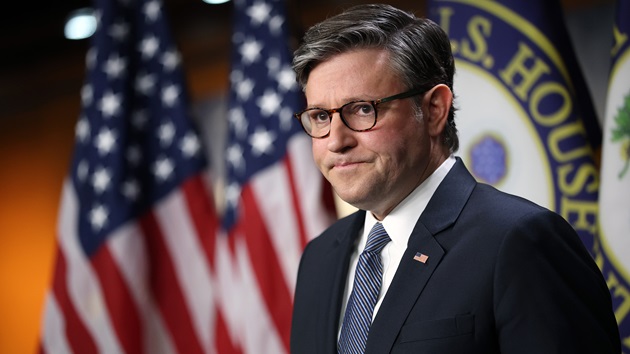
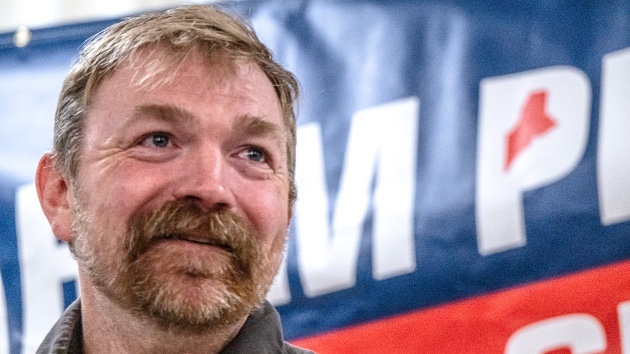

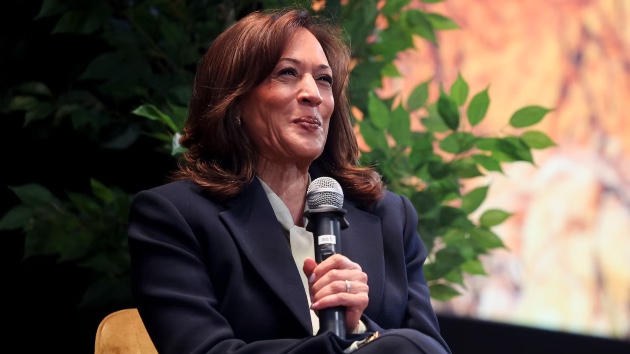
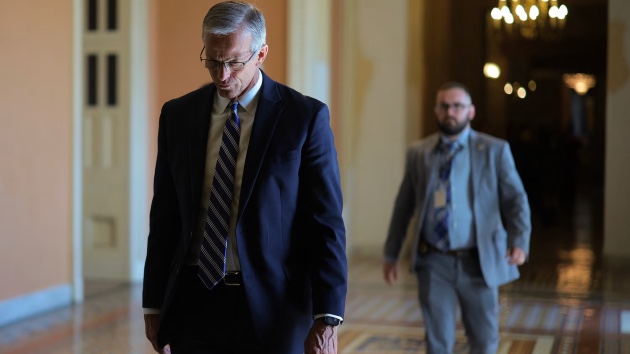

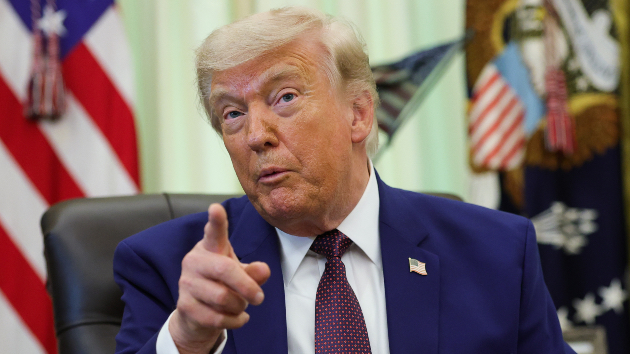
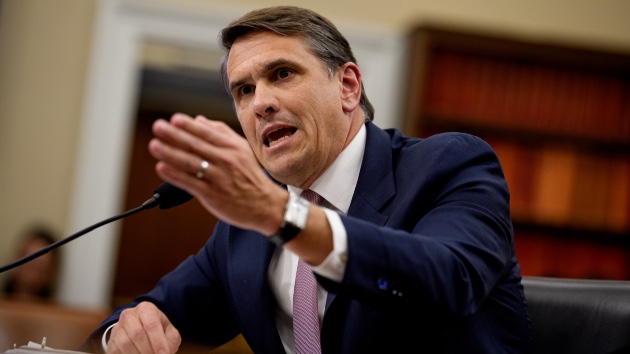
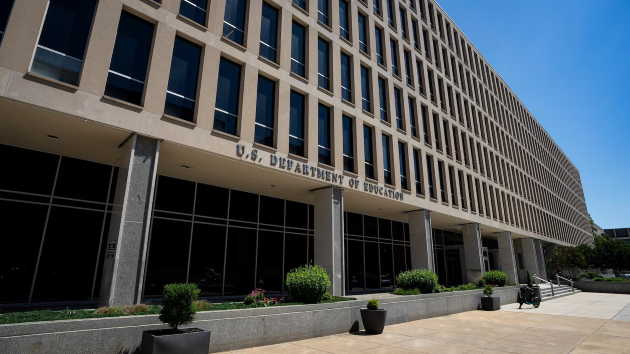

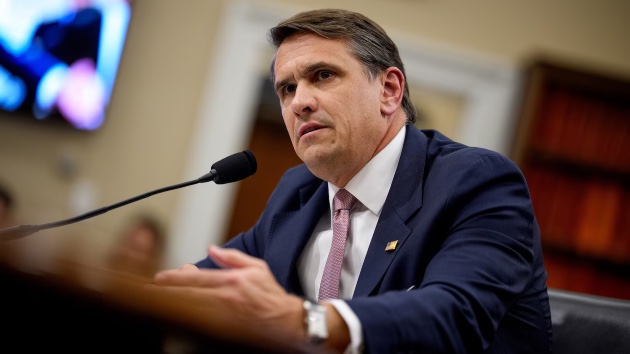
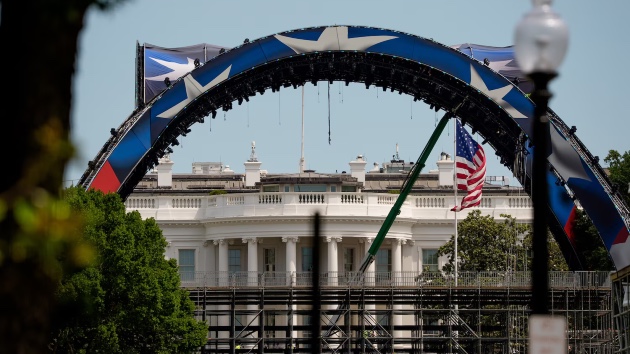

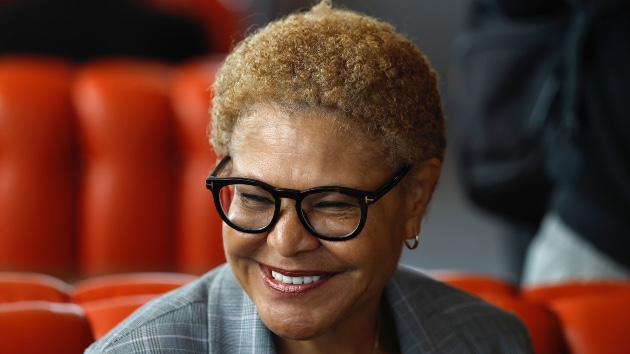
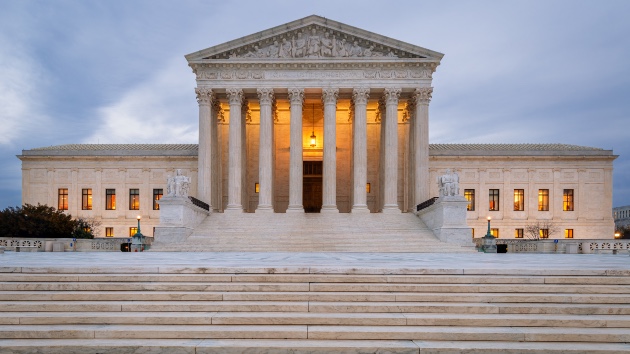


.jpg)